
Building a Taxonomy of Skills That Improves Tech Hiring and Retention
As technology roles continue to evolve, organizations are discovering a quiet problem inside their hiring and workforce planning processes. 87% of employers are either experiencing or expecting a skills gap. Job titles no longer tell the full story of what teams need. Two candidates with the same title may bring vastly different capabilities, while critical skills often live across roles rather than within them. This is where a skills taxonomy becomes a powerful advantage.
A well-designed skills taxonomy gives organizations a shared language for talent. It helps hiring leaders move beyond static job descriptions and plan for capability, growth, and retention with far greater precision. Let’s explore what a skills taxonomy is and how it impacts tech hiring.
Defining Skills Taxonomy
A skills taxonomy is a structured framework that defines, categorizes, and organizes the skills required across roles, teams, and career paths. In technology organizations, it often includes technical competencies, adjacent skills, and proficiency levels tied to genuine business outcomes.
Unlike a simple skills list, a taxonomy connects skills to roles, project phases, and progression paths. This clarity improves hiring decisions by focusing on what matters most to performance, rather than relying solely on titles or years of experience. For staffing strategy, it creates alignment between workforce planning, recruiting, and long-term talent development. Recent research indicates 94% of employers using skills-based hiring agree it better a predictor of employee success on the job than a resume.
How Skills Taxonomies Support Skill Based Hiring Strategies
Skill based hiring strategies depend on consistency. Without a shared framework, hiring managers may evaluate candidates differently for the same role, leading to mismatches and slower decision making. A skills taxonomy standardizes expectations while still allowing flexibility.
By defining core, secondary, and emerging skills for each role family, organizations can evaluate candidates more accurately and broaden their talent pool. This approach also reduces bias tied to traditional career paths and opens doors to candidates with transferable skills.
Practical Steps to Build a Skills Taxonomy
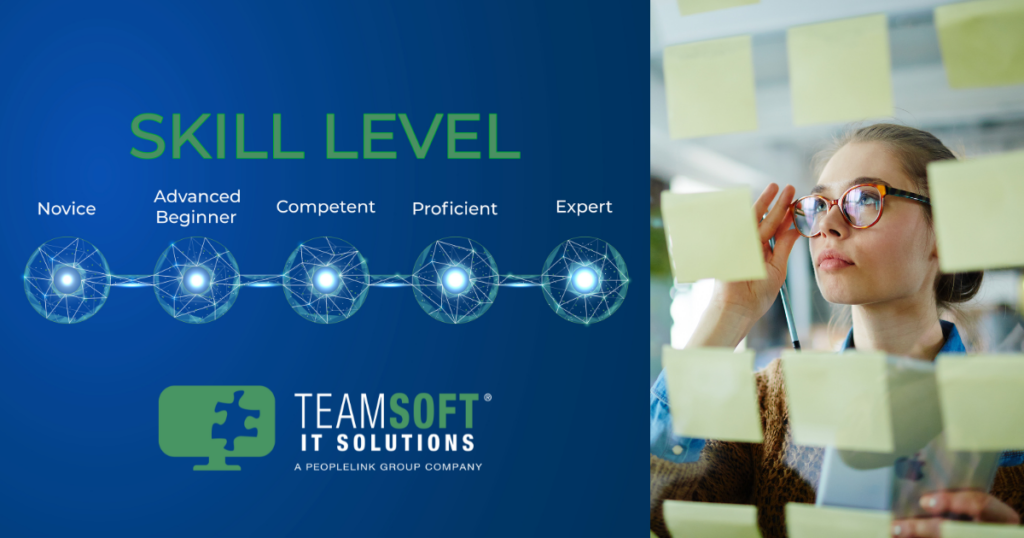
Building a skills taxonomy starts with understanding how employees complete work. Successful organizations begin by identifying role families rather than individual job titles. For example, cloud engineering and security operations each represent families with shared foundations and specialized variations. From there, employers group skills into logical categories such as technical, operational, and collaborative capabilities. Companies define proficiency levels to reflect real expectations, from foundational knowledge to advanced application and leadership. This structure allows teams to map skills to project phases, delivery timelines, and future initiatives.
Employers should treat a skills taxonomy as a living framework. As tools, platforms, and methodologies change, the taxonomy must evolve. Regularly reviewing the taxonomy will ensure its relevance.
Improving Candidate Matching and Internal Mobility
One of the most immediate benefits of a skills taxonomy is better candidate matching. Rather than assessing alignment based on surface level criteria, recruiters and hiring managers can base hiring decisions on capability, leading to stronger placements and faster ramp up times.
Internally, the same framework supports mobility and retention. Employees gain visibility into the skills they need to grow into new roles or projects. This transparency increases engagement and reduces the likelihood that high performers leave simply because they cannot see a clear path forward. In fact, a recent survey indicates 89% of employers using skills-based hiring have seen an improvement in retention.
Why Skills Taxonomies Improve Retention
People frequently discuss retention in terms of compensation and culture, but clarity plays an equally key role. When employees understand how their skills fit into the organization and how they can continue to grow, they are more likely to stay.
A skills taxonomy enables targeted upskilling, fair role evolution, and more meaningful recognition. In addition to enabling a clear path forward for employees, a skills taxonomy helps leaders plan development investments that align with future needs rather than reacting to sudden shortages.
How Your Staffing Partner Helps Implement a Taxonomy of Skills
Often organizations understand the value of skill-based frameworks but struggle to implement them. This is where a technology staffing partner adds value beyond sourcing resumes. A partner like TeamSoft helps define role families, validate skill groupings against real market data, and align taxonomies with current and future hiring needs. We also support the transition from framework to execution by using skills-based matching to identify candidates who align with both immediate project needs and long-term growth plans.
Because we work across regions and technology stacks, we bring insight into how skills are evolving in the market, what combinations are most in demand, and where organizations can gain flexibility without sacrificing quality.
Turning Structure into a Competitive Advantage
In a competitive talent market, organizations that hire faster and retain longer share one thing in common. They know exactly what skills they need and why. A well-designed skills taxonomy transforms workforce planning from guesswork into strategy. If you are ready to move toward a skill-based hiring strategy, contact TeamSoft today.